Best Duck for a Pet: How Eight Common Breeds Compare
Which duck breed makes the best pet? Pekin, Call, Runner, Khaki Campbell, Cayuga, Rouen, Muscovy and Crested compared on temperament, noise, flight and size.
There is no single best duck for a pet. The breeds people keep differ in three ways that matter at home: how loud they are, whether they can fly over a fence, and how jumpy they are when you reach for them. Size and egg-laying come after those. This post compares eight common breeds on those points. If you haven't read the basics yet, pet duck 101 covers what any duck needs, whatever the breed.
One caution first. Most of the numbers below come from a hatchery (Metzer Farms) or from a university extension table written for meat and egg production, not for pets. Where they disagree, we say so. The "nervousness" scores are Metzer staff ratings on a 1 (very calm) to 9 (more nervous) scale (Metzer Farms, Compare Duck Breeds). They are one hatchery's opinion, not a measurement, and individual ducks vary.
The short version
- Calmest on paper: Muscovy (1.0) and Call (1.0) on Metzer's scale, then Rouen (4.5) and Pekin (5.5).
- Quietest: Muscovy. Metzer says the hens lack the loud quack of other female ducks (Metzer Farms, White Muscovy Ducks).
- Smallest: Call, around 1 to 2 pounds, against 8 pounds and up for a Pekin.
- Jumpiest on paper: Khaki Campbell (9.0) and White Crested (9.0).
- Can fly: Muscovy and Call. The Pekin, Runner, Cayuga and Crested are listed as flightless in the sources below.
Pekin: the default first duck
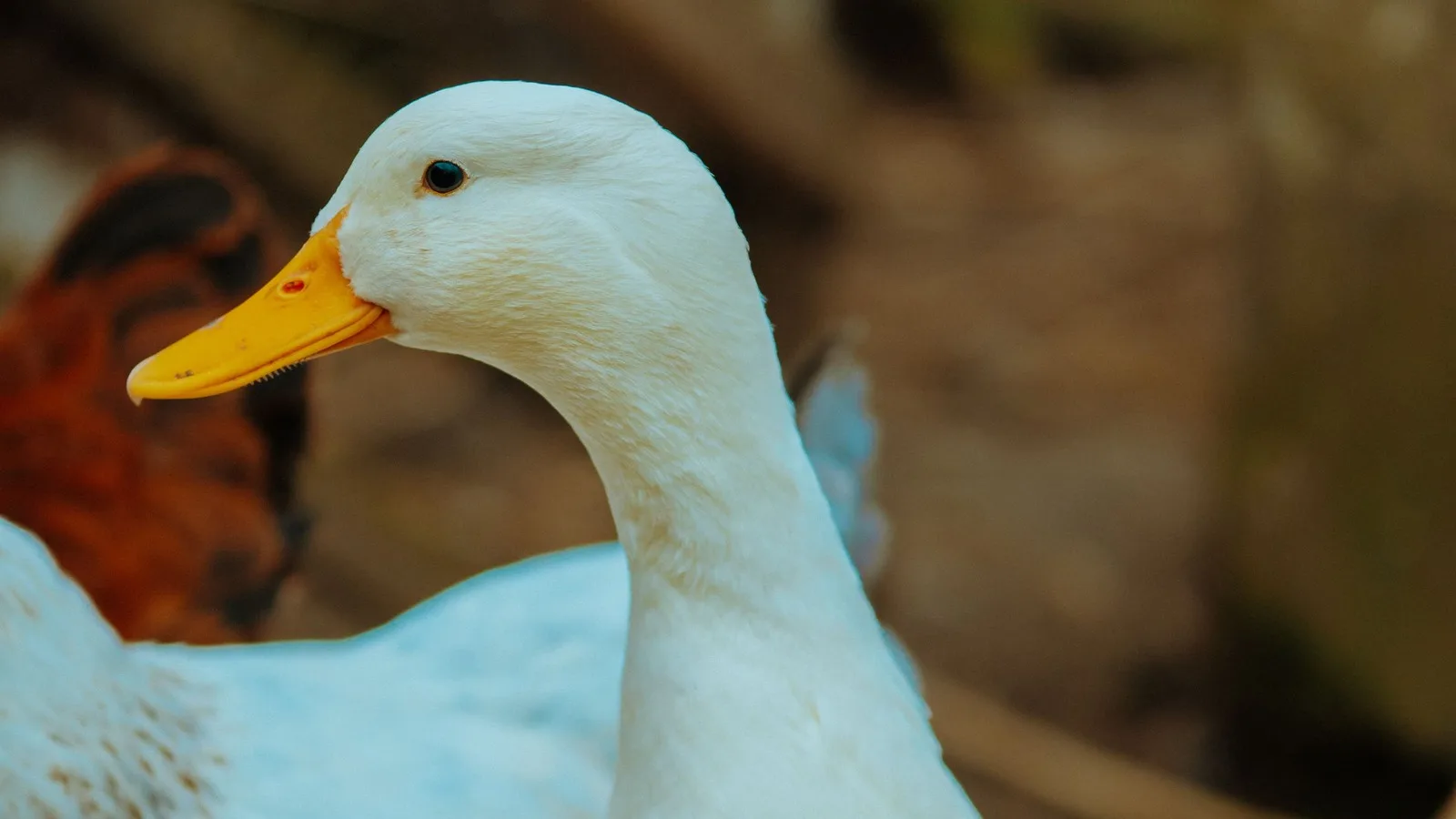
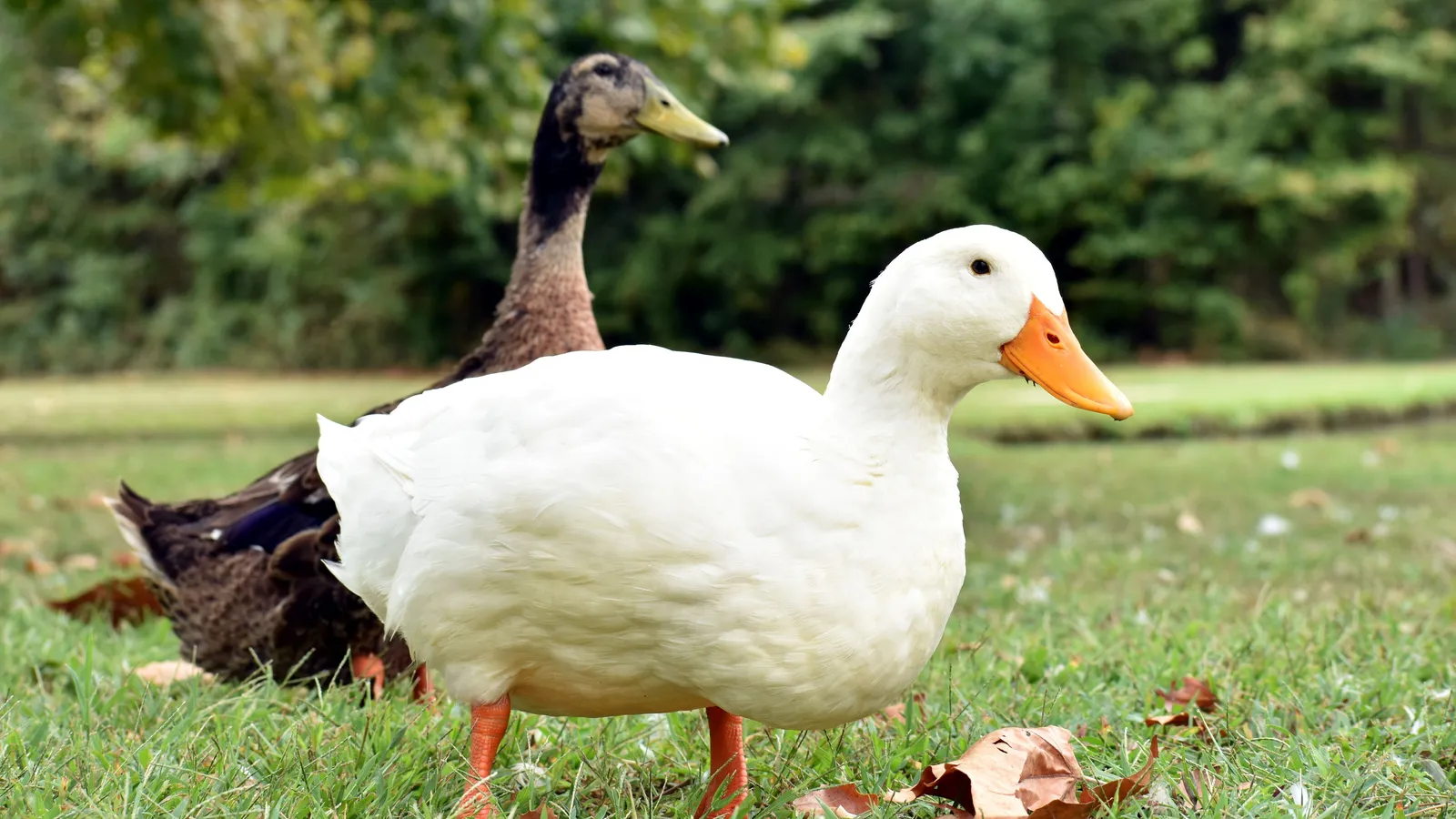
Pekins are the white ducks most people picture. Metzer calls them calm, though its numeric score puts them in the middle of the scale at 5.5 (Metzer Farms, Compare Duck Breeds). They are large: the University of Kentucky extension table lists hens at 8 to 9 pounds (University of Kentucky, Selecting Ducks). They do not fly. Egg numbers vary by source, from 100 to 200 a year. Hens are not quiet. Metzer notes that domestic ducks can be loud, females especially (Metzer Farms, 10 Things You Should Know). Our full Pekin breed page and Pekin ducks as pets go deeper.
Fits: first-time keepers who want a steady, widely available duck.
Call: small, friendly, loud and a flier
Calls are bantams. The Kentucky table (Selecting Ducks) puts hens at about 1.1 to 1.25 pounds, and Metzer lists its breeders at 1 to 2 pounds. Metzer calls them friendly and scores them 1.0, but its page also quotes buyers who found them aggressive or frightened, so treat it as an average (Metzer Farms, Call Ducks). The catch is noise and flight. Metzer says the loud quack is why they were used as decoys, and it warns that Calls fly very well. Plan on a covered run. See the Call breed page.
Fits: small yards with tolerant neighbours and a covered pen.
Indian Runner: upright, quick and nervy
Runners stand like bowling pins and run rather than waddle. The Kentucky extension says Runners tend to be nervous and flighty and will stampede when startled (University of Kentucky, Selecting Ducks). Metzer's scores differ by colour, from 3.5 for Black to 7.5 for Fawn and white (Metzer Farms, Indian Runner Ducks, 2018). They are lighter than a Pekin, at roughly 3.25 to 4.5 pounds, and they do not fly. The Livestock Conservancy lists them as a recovering breed (The Livestock Conservancy, 2026 Conservation Priority Poultry Breeds). See the Indian Runner page.
Fits: keepers with a securely closed run who like an active, foraging duck.
Khaki Campbell: the egg machine
Khaki Campbells are known for eggs. Kentucky says 200 to 300 a year; Metzer's table says 165 to 240 for its own breeders, and Metzer's page notes that the highest figures assume artificial light (Metzer Farms, Khaki Campbell Ducks). They also score 9.0 for nervousness, the highest on Metzer's chart. That makes them a better choice for someone who wants eggs than for someone who wants a lap duck. See the Khaki Campbell page.
Fits: egg-focused keepers who are patient with a jumpy bird.
Cayuga: striking, close to home, jumpy
Cayugas are glossy black with a green sheen. Metzer scores them 8.8 for nervousness, among the jumpiest on its chart, and lists them as flightless (Metzer Farms, Compare Duck Breeds). Eggs range from 60 to 100 (Kentucky) to 130 to 180 (Metzer), per Kentucky and Metzer's Cayuga page. The Livestock Conservancy lists the breed on its Watch category. See the Cayuga page.
Fits: keepers who want a distinctive-looking duck and can give it space to settle.
Rouen: big and calm, with two types
Rouens look like oversized mallards. Metzer calls them very calm and scores them 4.5 (Metzer Farms, Rouen Ducks Breed Guide, 2018). There are two types: a lighter utility strain that lays 140 to 180 eggs, and a much heavier show strain that lays far fewer. Ask a seller which one you are buying. Sources disagree on flight: Metzer's blog says flightless, its comparison table says "Maybe", and Kentucky says they are too heavy to fly away. See the Rouen page.
Fits: a calm, mallard-coloured pond flock.
Muscovy: quiet, calm and strong
Muscovies are not descended from the mallard, and they are the quietest option here. Metzer scores them 1.0 for calmness and says hens lack the loud quack (Metzer Farms, White Muscovy Ducks). They also fly well and perch in trees, and drakes are strong with sharp claws. Metzer suggests gloves for handling. Drakes are large, 10 to 12 pounds in the Kentucky table. If neighbours are your main worry, this is the breed to read about first. See the Muscovy page.
Fits: quiet neighbourhoods and keepers who can contain a flier.
White Crested: the puff on top
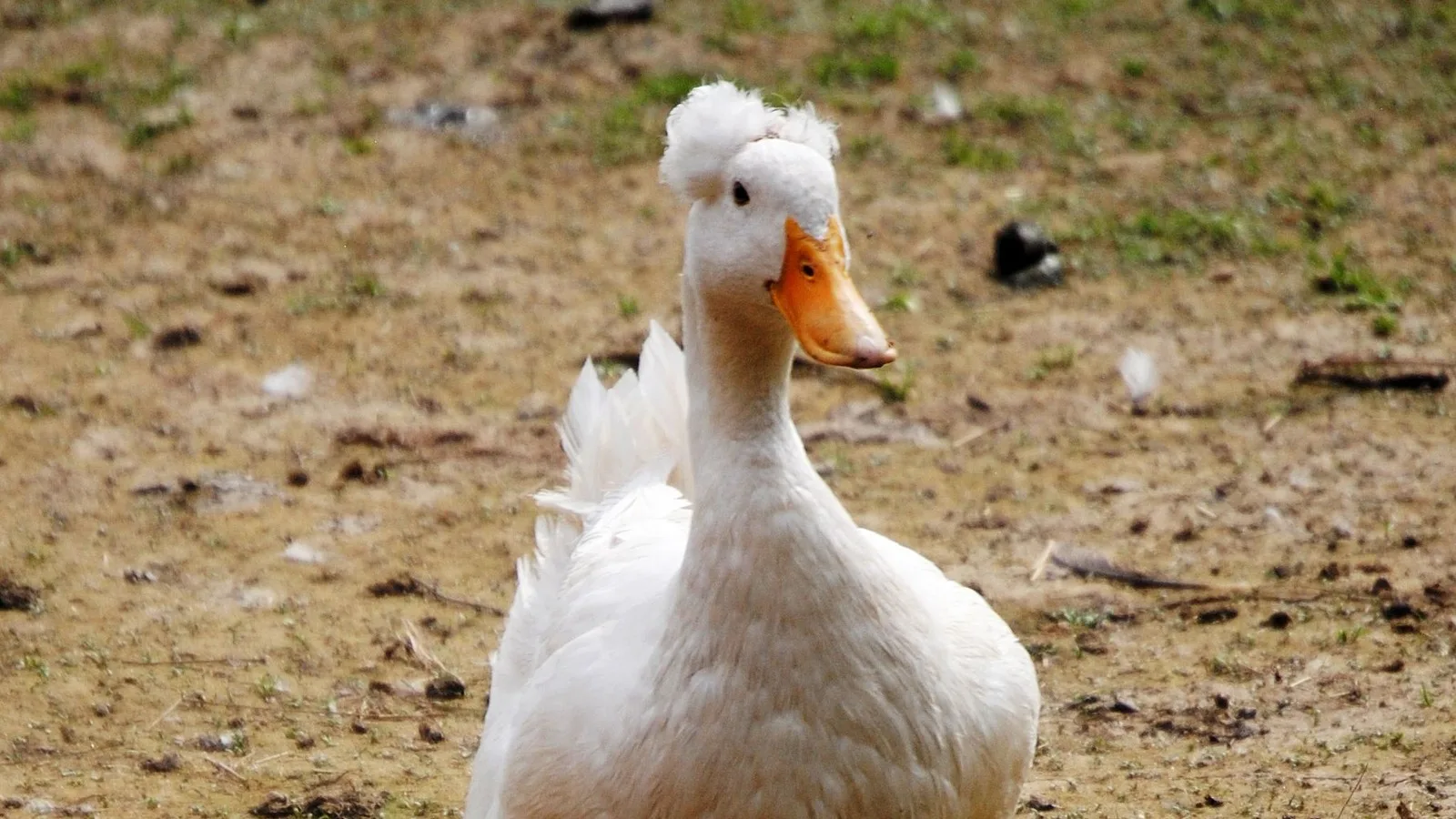
Crested ducks wear a tuft of feathers. They score 9.0 for nervousness, the top of Metzer's scale (Metzer Farms, White Crested Ducks), and they do not fly. We would not pick one as a first duck. See the Crested page.
Fits: patient keepers who like the look and accept a nervous bird.
What matters more than breed
Whatever you choose, ducks are social. Plan for at least two, deep water for dunking the head, predator-safe housing and a vet you have lined up before you need one (find a duck vet). Individual temperament depends on how a duck was raised and handled. A hand-raised duckling of a "nervous" breed can be friendlier than a poorly socialised one of a "calm" breed. That is our judgment from keeper accounts, not a measured finding. Mixed-breed ducks are common in rescues, and meeting the individual bird beats reading a breed label. Our guide to adopting a duck covers where to look.
Sources
- Metzer Farms (hatchery), Compare Duck Breeds: nervousness scores and flight ratings; one hatchery's opinion
- Metzer Farms, Cayuga Ducks for Sale
- Metzer Farms, Call Ducks for Sale
- Metzer Farms, White Muscovy Ducks for Sale
- Metzer Farms, Khaki Campbell Ducks
- Metzer Farms, White Crested Ducks
- Metzer Farms, Indian Runner Ducks (2018)
- Metzer Farms, Rouen Ducks Breed Guide (2018)
- Metzer Farms, 10 Things You Should Know Before You Get Pet Ducks
- University of Kentucky Cooperative Extension, Selecting Ducks (ASC-198) (undated; written for meat and egg selection, not pets)
- The Livestock Conservancy, 2026 Conservation Priority Poultry Breeds
Have a duck-specific question?
Find a vet near you who actually sees waterfowl.
Questions, or numbers from your own area? Ask in the forum.
Discuss in the forum