What Do Ducklings Eat? Feeding Pet Ducklings, Week by Week
What to feed pet ducklings from day one: the starter feed, the niacin catch, when to switch to grower, which treats are fine, and what to do about a wild duckling.
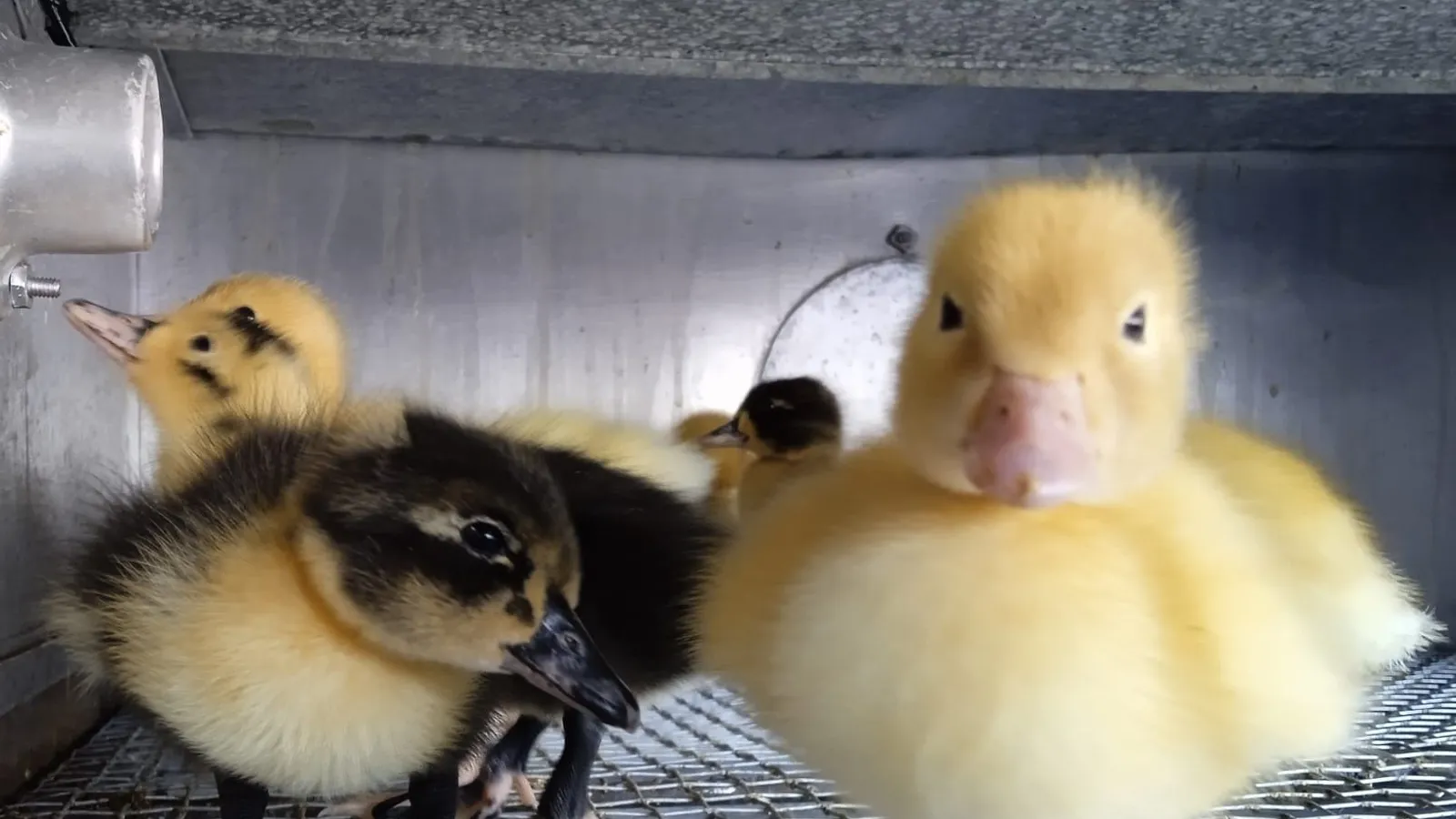
Pet ducklings eat a crumbled starter feed for roughly their first three weeks, with water within reach of the feed every time they eat. Almost everything else you can offer, from greens to peas, is a small extra on top. This guide covers what that starter needs to contain, the niacin catch that trips up people who buy chick feed, when to move on, and what to do if the duckling you are asking about is a wild one. For the bigger picture, start with pet duck 101.
The short answer
- Hatch to about 3 weeks: a crumble starter. Metzer Farms, a waterfowl hatchery, says newly hatched ducklings need crumble starter for the first 3 weeks (Metzer Farms, Brooder Setup and Care).
- Protein: at least 20% crude protein. Metzer's feed guide calls about 22% ideal for a waterfowl-specific starter (Metzer Farms, Best Feed and Feeders, 2017).
- Niacin: make sure the feed has it, or add it yourself (below).
- After that: a grower feed at 17–20% protein, then adult feed. Timing varies by source.
The starter feed: what to look for
Waterfowl starter is the simplest choice, but an all-flock or chick starter works if it has enough protein and contains niacin; Metzer says as much on its brooding page. Both the page and its feed guide give 20% crude protein as the floor.
Protein matters in both directions. Metzer says too little can cause developmental problems, and that too much can cause wing problems. The Merck Veterinary Manual ties angel wing, where the last wing joint twists as flight feathers grow too fast, to excessively rapid growth in waterfowl (Merck Veterinary Manual, Nutrition in Waterfowl). Do not add protein-heavy extras to a feed that already meets the number.
Merck's own starter range is higher than Metzer's: it gives 25–28% protein for young waterfowl up to 8 weeks. The two sources disagree, and Merck's page is a general waterfowl reference rather than a pet-duckling feeding chart. Either way, a starter that meets the 20% floor and has niacin is the common hatchery recommendation, and a feed near the top of the range is not a mistake. A third source is lower still: the Royal Veterinary College's exotics service gives 18 to 20% protein for a duck starter crumb up to 3 weeks, then about 15% for a grower feed from 3 to 20 weeks (Royal Veterinary College, Duck care sheet). That sheet is written for backyard ducks and does not explain the difference from Merck or Metzer. Treat the three as a range, and check what your feed's bag says.
Your feed's guaranteed analysis on the bag tells you the protein. The niacin figure often is not on the tag, which brings us to the part people miss.
The niacin catch
Ducklings need more niacin than chicks do. Metzer says waterfowl need two to three times the niacin chickens do during early growth, that about 90% of niacin problems appear in the first 10 weeks, and that the first sign is in the legs: bent, splayed or weak legs that cannot support the bird (Metzer Farms, Niacin for Ducklings, 2018).
Metzer says most poultry feed contains enough, but makers are not required to list niacin on the tag, so you may have to ask the manufacturer. If a feed falls short, it names niacin tablets, vitamin B3 drops and brewer's yeast as options. That article gives no dosages. For a Pekin worked example, see the niacin figures in what do pet ducks eat. Two practical notes from the same source: supplementing is not likely to straighten legs once bones have deformed, so act at the first sign of trouble, and an overdose is considered unlikely at these small amounts.
A duckling with a leg problem needs a vet who sees birds, not just a feed change; our duck vet guide covers finding one.
What about medicated chick starter?
Many chick starters carry a coccidiostat, and new owners worry about it. Metzer's review found no harm to ducklings at the doses used for chickens and turkeys, and it recommends a nutritionally complete medicated starter over an unmedicated feed that lacks what ducklings need (Metzer Farms, Medicated Poultry Feed and Waterfowl Safety). That article is from 2011 and cites a 1980s study, so read the current label and treat it as hatchery guidance, not a veterinary standard.
Feeding day by day: how, not just what
- Feeder: a chick feeder keeps birds from walking in the food. A shallow dish works, but ducklings hop in and make a mess; raising it on a brick or block helps (Metzer, feed guide above).
- Water beside the feed. Keepers commonly put water next to the feed because ducks dunk their bills as they eat (common practice; we found no study behind it). Metzer's brooding page describes a waterer at shoulder height on a drip platform extending about 6 inches, with water set out a day ahead so it is not cold. See raising ducklings as pets for waterer depth and drowning risk.
- Keep it dry. Ducklings turn their water dish into a splash zone. Swap soaked crumble for fresh.
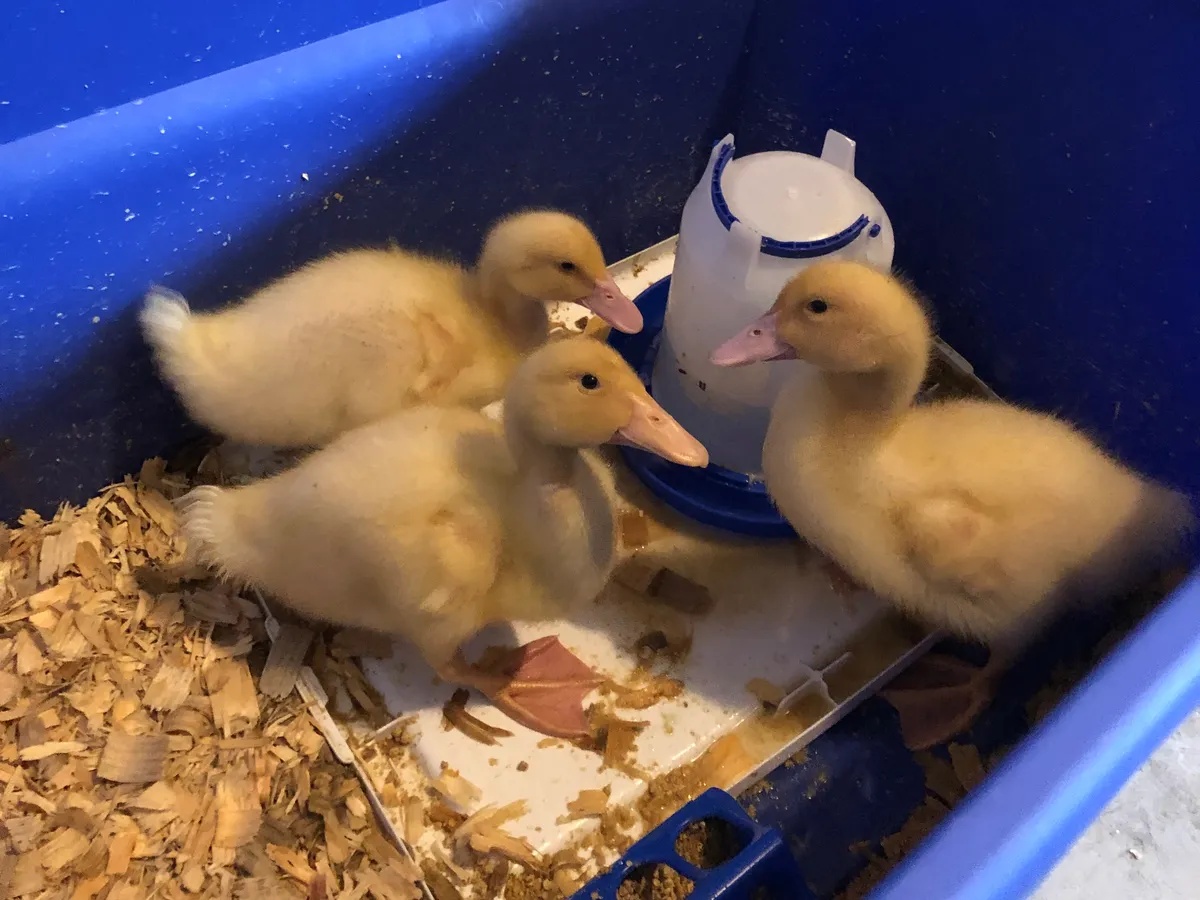
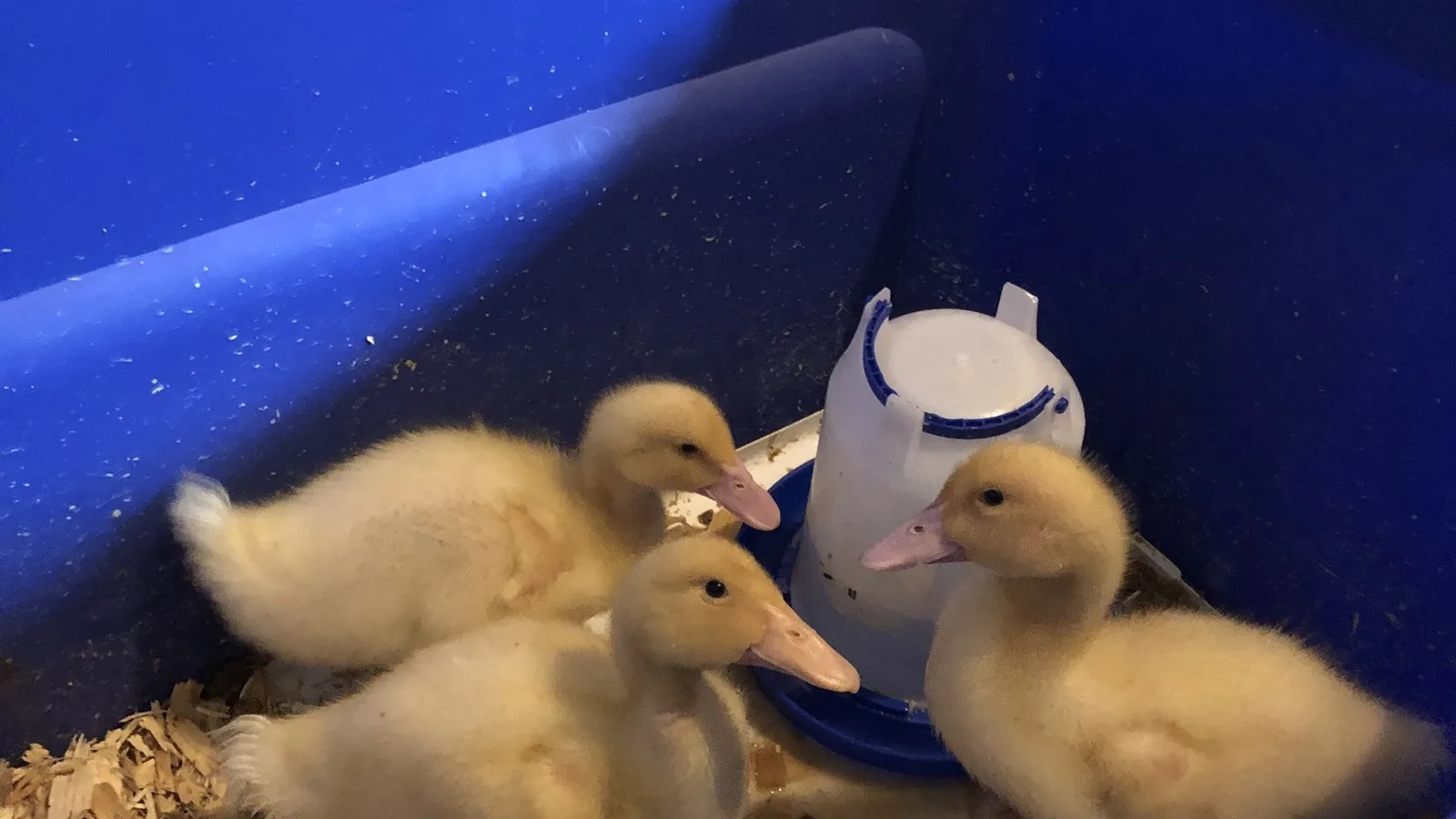
Our own ducklings around a chick feeder in a tub brooder. The wet shavings by the feeder are normal; ducklings splash everything.
When to switch to grower feed
Metzer's brooding page gives two timings and does not reconcile them: one section says birds can move to a grower feed with 17–20% protein after 3 weeks, another says to switch at 3–5 weeks. Merck suggests a starter diet up to 8 weeks, a starter and maintenance mix from 8 to 12 weeks, and a maintenance diet of 14–17% protein after that. In short, sources range from 3 to 12 weeks for the full change. Check the bag of the feed you use for its own transition advice, and move over gradually. Metzer says to go to layer feed at the first mating activity or first egg. The grow-out stage for a yard flock is in raising backyard ducklings.
Treats and extras
Treats are where owners and sources diverge most. Metzer's pages above do not give an age for starting treats, and we found no veterinary or extension source that does. The only guidance we found on when to start comes from keeper forums, so take it with a large grain of salt: these are individual owners' experiences, not research or veterinary advice, and the threads are old or small. In a 2011 Backyard Chickens thread, "when can ducks get treats", one keeper says peas are fine at about one week, and another says nearly any duck-safe food works from a week old if it is chopped small and hard foods like squash and carrots are skipped. In a 2022 thread, "worried that i gave treats to my ducklings too early", a first-time owner fed tiny pieces of peas, kale and dandelion at roughly a week old; a forum moderator replied that the ducklings would probably be fine as long as they kept acting normally, eating and pooping, and another poster puts out chick grit once treats begin. Treat these as "what some keepers do", not a safe age. Metzer's guidance in the grit section below points the other way on whole foods, and a vet who sees birds can tell you more for your ducklings.
If you offer extras, keep the pieces tiny, the quantity small, and the starter as the main food. The adult guidance in what do pet ducks eat covers safe treats and foods to skip. Metzer's list of foods to avoid (onion and garlic, chocolate, caffeine, avocado, citrus, dairy, dog food) is written about ducks in general, not ducklings, so be at least as careful with a duckling (Metzer Farms, Foods Ducks Should Not Eat).
Grit. Metzer says not to give grit to day-old ducklings, and that whole grains are typically not fed until 4–6 weeks. Ducklings on crumble do not need grit; once you feed whole grains, offer grit in a separate bowl (Metzer Farms, Grit).
Bread, milk and the old advice
Merck says diets built on bread, lettuce and corn cause deficiencies in protein and several vitamins, with poor plumage and swollen joints among the signs (Merck, above). Bread is a poor food for a fast-growing duckling for the same reason. Metzer lists dairy among foods ducks should avoid, citing lactose intolerance.
If the duckling is wild
A lot of people searching this have found a duckling, not bought one. The RSPCA says ducklings usually stay close to their parents, so a mother is often nearby; if the parents do not return within two hours or are found dead, contact a wildlife rehabilitation centre for advice (RSPCA, Found a baby duck, goose or swan). That page is UK guidance and does not say what to feed a lone duckling. Rules on keeping wildlife differ by state; call your state wildlife agency or a local rehabber before feeding or housing it. We are not covering wild duckling diets here.
Quick answers
- Can ducklings eat chick feed? Yes if it has at least 20% protein and niacin, per Metzer; Merck advises against standard chicken pellets for waterfowl in general, so check the label.
- Can ducklings eat adult duck food? Adult feeds are lower in protein than starter; Merck gives 14–17% for maintenance versus 25–28% for the young. Use starter first.
- How much? Metzer gives no amount for ducklings. Many keepers leave starter available at all times; we did not find a source for a daily amount.
Sources
- Merck Veterinary Manual, Nutrition in Waterfowl
- Metzer Farms, Brooder Setup and Care (hatchery)
- Metzer Farms, Best Feed and Feeders (2017)
- Metzer Farms, Niacin for Ducklings (2018)
- Metzer Farms, Medicated Poultry Feed and Waterfowl Safety (2011)
- Metzer Farms, Foods Ducks Should Not Eat
- Metzer Farms, Grit
- Backyard Chickens forum, when can ducks get treats (keeper forum, 2011; anecdotes only)
- Backyard Chickens forum, worried that i gave treats to my ducklings too early (keeper forum, 2022; anecdotes only)
- RSPCA, Found a baby duck, goose or swan (UK guidance)
- Royal Veterinary College, Duck care sheet (veterinary school exotics service, reviewed December 2022; written for backyard ducks)
Have a duck-specific question?
Find a vet near you who actually sees waterfowl.
Questions, or numbers from your own area? Ask in the forum.
Discuss in the forum