What Do Pet Ducks Eat? A Practical Feeding Guide
What to feed pet ducks day to day: the pellet base, safe treats, foods to skip, and why chicken feed and bread both fall short.
Most of what a pet duck eats comes down to one decision: a proper waterfowl pellet as the base, with everything else (greens, treats, foraged bugs) layered on top. This guide covers that base, the treats that are safe, the foods to skip, and how feeding changes with age. For the wider picture of keeping ducks as pets, start with pet duck 101. This guide is about adult ducks; for ducklings, see what ducklings eat, since their feed needs differ.
The base diet: a waterfowl pellet
Adult pet ducks do best on a commercial duck or waterfowl pellet as the main food. The Merck Veterinary Manual's waterfowl nutrition page recommends a maintenance diet of commercial duck or game-bird pellets at roughly 14–17% protein and 3–6% fat once birds are past about 12 weeks old (Merck Veterinary Manual, Nutrition in Waterfowl). The Royal Veterinary College's exotics service gives a similar adult range of 14 to 16% protein, rising to 16 to 18% when laying, and says adults should also get calcium such as oyster shell (Royal Veterinary College, Duck care sheet). It differs from Merck on chicken feed: the RVC says a chicken layer pellet is suitable for adult laying ducks, though chicken food should be avoided for juveniles, while Merck is more cautious (see the chicken-feed section below). Check the guaranteed analysis on the bag rather than trusting the front label.
How much? It varies by breed, size, season and how much the bird forages, so there is no single figure. As a reference point, Metzer Farms' niacin worked example uses about 0.45 lb of feed a day for an adult laying Pekin (Metzer Farms). Purina's duck pellets are sold to be fed free choice, as the sole diet from hatch through adulthood (Purina Duck Feed Pellets). Keep the feeder dry and put water beside it, because ducks use water to swallow and clear their bills. Wet or mouldy feed is a bigger risk than overfeeding.
Can pet ducks eat chicken feed?
Short answer: it is a compromise, not a match. The Merck manual cautions against standard chicken starter, grower, maintenance or layer pellets for waterfowl, because they generally carry less protein and fewer vitamins and minerals than waterfowl need (same source as above). The nutrient most often mentioned is niacin, which growing ducks need for sound bones and legs.
A duck-specific pellet avoids the problem: Purina's lists at least 60 ppm niacin on the label. If you only have a feed without enough, Metzer Farms works from a 55 ppm requirement and suggests, for a three-week-old Pekin duckling eating about 0.35 lb a day, slightly less than two tablespoons of human-grade brewer's yeast daily, and notes supplementing is rarely needed after about 10 weeks (Metzer Farms). It gives no separate adult dose, so ask a waterfowl vet before dosing an adult. Medicated chick starter is a separate problem for ducklings, covered in raising ducklings as pets. If you also keep chickens, the feed conflicts are laid out in mixing ducks and chickens.
Safe treats and extras
Treats should stay a small share of the diet. Common, generally safe choices:
- Leafy greens such as chopped kale, dandelion greens, or romaine in moderation (iceberg is mostly water)
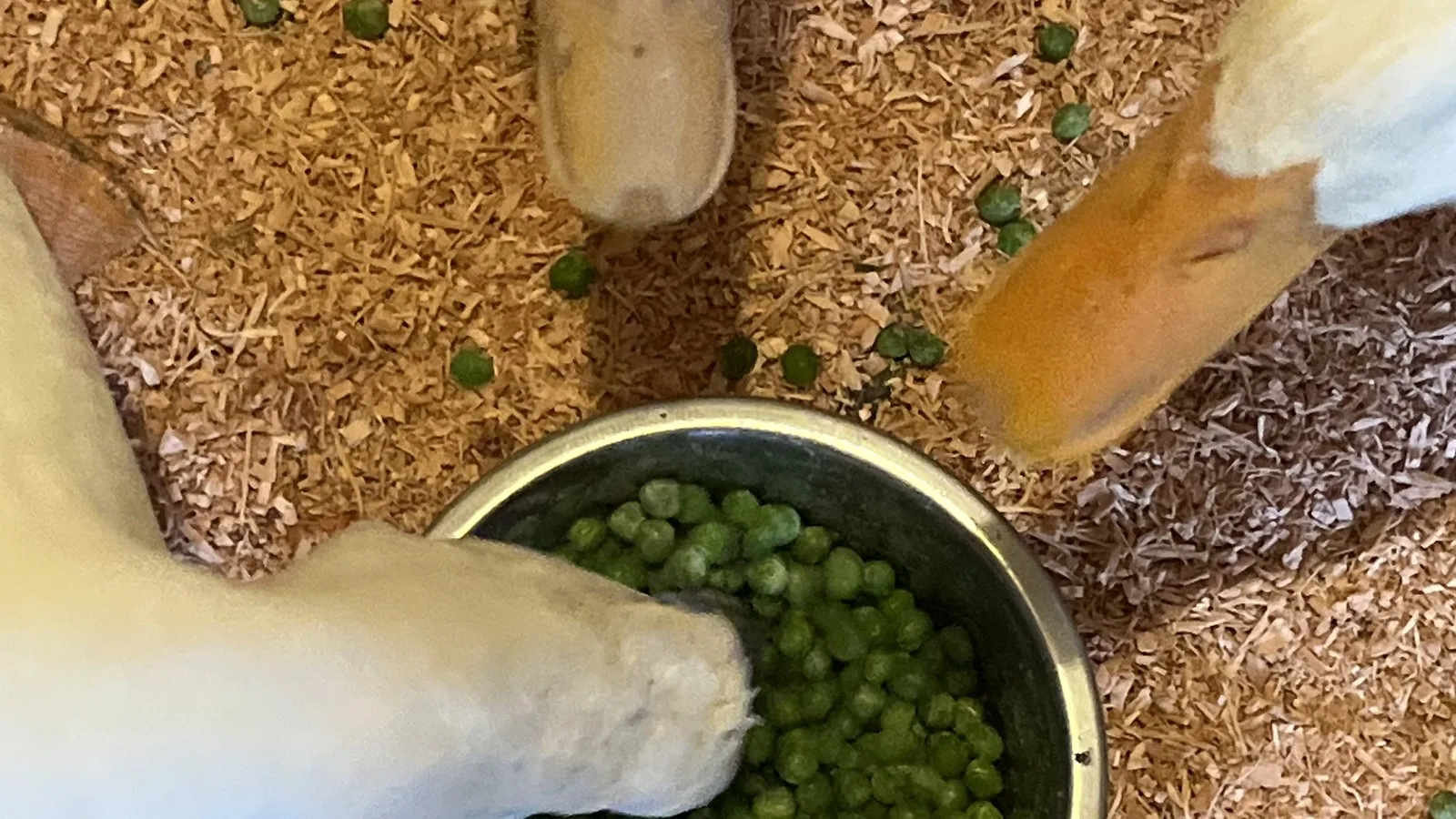
- Peas, fresh or thawed frozen, a classic duck favourite
- Cooked rice or oats, plain and in small amounts
- Chopped soft fruit like berries or melon, no pits
- Mealworms and other insects, as protein treats, plus whatever bugs and slugs they find while foraging
The Merck manual notes that diets built on bread, lettuce and corn lead to protein and vitamin deficiencies, which is the practical reason treats must not replace the pellet base (same source as above).
Do pet ducks need grit?
Grit is small, hard stone that ducks swallow so the gizzard can grind food. It depends on what you feed. Metzer Farms says ducks have grit needs similar to chickens: wild birds find all they need in their environment, confined domestic birds may need it provided, and ducks eating a mash, crumble or pellet don't need it because the feed mill has already ground the feed. If you feed whole corn, wheat or other whole grains, grit is needed (Metzer Farms, Grit).
For a pet duck on pellets, that means grit is optional for the pellets themselves and worth having once you add whole grains or other coarse foods. Three practical points, the first two from the same source:
- Offer it separately. Put grit in its own bowl so each duck takes what it wants, rather than mixing it into the feed.
- Don't give it to day-old ducklings. Whole grains aren't usually fed until ducklings are at least four to six weeks old, which is when grit becomes relevant.
- Don't confuse grit with oyster shell. Metzer draws this distinction for chickens, and the same logic applies to ducks: oyster shell dissolves in the gut and supplies calcium for eggshells, while grit stays in the gizzard and grinds food. Laying ducks may need the shell and still not need grit, and vice versa.
Metzer doesn't say what grit size to buy for ducks or whether ducks with pond or soil access get enough on their own, and we found no veterinary or extension source that does, so ask a waterfowl vet if your ducks are confined and eating a lot beyond pellets.
Foods to skip
- Bread and crackers. They fill a duck up without much nutrition. Audubon's advice on feeding bread to ducks and other birds is to let them find their own food where possible (Audubon California). Whether bread directly causes angel wing is still argued over, so treat it as a poor staple rather than a proven poison.
- Chocolate, caffeine (coffee, tea) and avocado. Metzer Farms lists these as foods ducks should not eat: chocolate for theobromine and caffeine, caffeine for heart and lung problems, and avocado for persin, which it says can cause sudden death (Metzer Farms, Foods Ducks Should Not Eat). That is a hatchery's guidance, not a veterinary study, so treat it as a firm "avoid".
- Onions, garlic, dairy, citrus and raw nightshades (green tomatoes, potato, rhubarb) are on the same Metzer list.
- Moldy or spoiled food of any kind.
- Salty, fried or sugary human snacks.
- Wild bird seed as a main food. Seed mixes are not formulated for waterfowl, and we found no veterinary guidance supporting them as a duck diet, so keep them out of the routine.
Feeding by age
Ducklings need a higher-protein starter and need it from day one; the details are in raising ducklings as pets. Merck gives starter protein as about 25–28% for the first weeks (same source as above). Growing ducks shift to a grower and then a maintenance feed. Laying females need extra calcium: Purina's directions say to supplement its duck pellets with oyster shell once ducks start laying (Purina). Merck puts protein at 16–21% during breeding season versus 14–17% for maintenance.
What a typical day of feeding looks like
A simple routine for a small pet flock looks like this. In the morning, refill the pellet feeder and swap the water before letting the ducks out. During the day, ducks that free-range will graze on grass, clover, slugs, snails and insects, which cuts down on how much pellet they eat and gives them something to do. In the evening, scatter a small handful of treats, such as peas or chopped greens, to bring everyone back toward the coop, then lock up as described in pet duck 101.
Because treats work as a recall tool, keep them small and consistent. A duck that learns the evening pea scatter will come when called, which makes nightly lockup much easier. If your ducks eat a lot of treats and leave pellets, cut the treats back; the pellets are the part carrying the balanced nutrition.
Seasonal changes
Appetite shifts through the year. In cold winters the Merck manual suggests adding corn to about 20% of the diet for extra calories. Ducks also eat more during breeding season, when protein needs rise. In summer heat, appetite often drops and water intake rises, so check that water stays cool and shaded. In freezing weather, make sure feed stays dry and water stays unfrozen, since a duck that cannot dunk its bill will often stop eating. Winter water is covered in backyard duck basics.
Feeding mistakes worth avoiding
- Switching feeds abruptly. Change over a week or so, mixing old and new, to avoid upset stomachs.
- Leaving wet feed out. Soaked pellets spoil fast, and spoiled feed can grow mold. Dump anything that has turned to mush.
- Letting treats take over. A bowl of peas is not a diet.
- Feeding on the ground in a muddy run. Use a feeder or a shallow dish so feed stays clean.
- Forgetting new ducks. A duck added to the flock may be bullied away from the feeder; put out a second feeding spot.
Water matters as much as food
Ducks eat with water nearby and need it deep enough to dunk their whole bill. Put the waterer next to the feeder, expect it to be fouled quickly, and plan to change it daily. See the water section of pet duck 101 for set-up.
Quick answers
- Can ducks eat grapes? Yes, in small pieces. Cut them so they are not a choking risk.
- Can ducks eat dog food? Metzer Farms advises against it, since it is formulated for dogs and often high in protein and fat (Metzer Farms). We found no good source on cat food, so skip it too.
- How often should I feed? Many owners put out feed morning and evening, or keep a feeder topped up. Pick a routine and keep it steady.
- Are wild-duck rules different? Yes. Feeding wild ducks at a park is a separate question from feeding your own flock, and the same bread concerns apply at larger scale.
When diet is a health question
A duck that stops eating, loses weight, or has leg trouble should be seen by someone who treats waterfowl, not handled with a feed change alone. Our duck vet guide explains how to find one.
Sources
- Merck Veterinary Manual, Nutrition in Waterfowl
- Metzer Farms, Determining How to Supplement Your Duck's Diet with Niacin
- Metzer Farms, Foods Ducks Should Not Eat
- Metzer Farms, Grit
- Purina, Duck Feed Pellets
- Audubon California, Bad idea: feeding bread to ducks and other birds
- Royal Veterinary College, Duck care sheet (veterinary school exotics service, reviewed December 2022; written for backyard ducks)
Have a duck-specific question?
Find a vet near you who actually sees waterfowl.
Questions, or numbers from your own area? Ask in the forum.
Discuss in the forum